Building More Than Steel: U. S. Steel’s Investment in People and Place - www.ussteel.com
Building More Than Steel: U. S. Steel’s Investment in People and Place
jun 15 , 2026
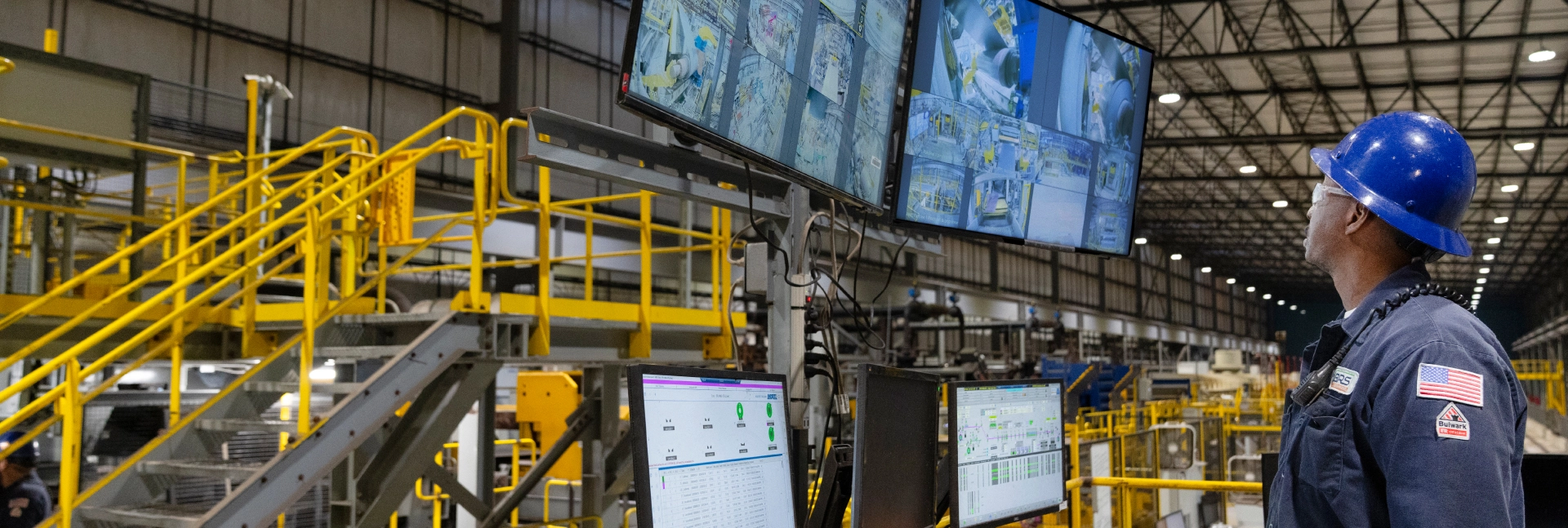
In 2016, when Big River Steel rolled its first coil, the team worked to make a positive impact on the community. With U. S. Steel’s arrival in 2019 alongside other industries, many of which support the growing local steel industry, we’re seeing something broader emerge: sustained economic growth that is reshaping Mississippi County, Arkansas.
With our completion of the Big River 2 expansion in 2024, that impact is no longer a hope – it’s a reality. We're seeing how strategic investments in people, place and industry has both grown U. S. Steel’s economic footprint and changed the trajectory of a community. And we expect this to continue thanks to our recently announced plans to construct a $1.9 billion direct reduced iron production facility at Big River Steel Works.
A community ready for renewal
The 1990s and 2000s were hard times for Mississippi County. The closing of Eaker Air Force Base in Blytheville meant a huge loss in population and revenue. Soon after, the region lost a textile factory that employed 4,000 people, a shoe factory, a cap and gown factory and a cabinet factory.
The opening of Big River Steel marked a turning point.
Talk to people like Megan Owens at the Osceola Chamber of Commerce and she’ll tell you the mill was a “biggest shot in the arm.”
A growing economic engine
That early momentum has accelerated.
Since 2022, U. S. Steel has increased its economic footprint within Arkansas by over 400 percent. Today, nearly 5,000 jobs are supported by Big River Steel Works, including employees, suppliers, service providers, and customers operating on site.
That growth extends across the state. U. S. Steel now works with more than 500 Arkansas-based businesses, strengthening local supply chains and ensuring that the benefits of investment stay close to home.
From jobs to community growth
Job creation is only the beginning. As employment opportunities expand, so does the need for housing, infrastructure, and local services.
That’s where initiatives like Work Here, Live Here come in. This partnership between the Grow Mississippi Community Foundation and local industry helps incentivize homebuilding and homeownership for manufacturing workers.
The results are tangible. The program has supported construction of 250 new homes in Mississippi County, with more homes built in 2024 than in the previous 45 years combined.
At Big River, nearly 10% of the workforce has taken advantage of the program, bringing new residents into the community and driving local economic activity across everything from retail to healthcare.
Connecting growth to quality of life
Economic growth depends on more than jobs—it requires strong community infrastructure.
Investments in healthcare, education, and public services help ensure that growth is sustainable. As previously highlighted, U. S. Steel’s support for local healthcare and emergency services plays a critical role in making Mississippi County a place where families can live, work, and thrive.
When people choose to build their lives here, they contribute to a cycle of growth that strengthens the entire region.
Building the next generation workforce
Long-term growth also depends on developing the next generation of skilled workers.
At Big River Steel Works, that effort is closely tied to Arkansas Northeastern College (ANC). Our $10 million investment in 2017 helped expand training programs in welding, electrical systems, logistics, and more, creating a direct pipeline from education to employment.
These programs are preparing students for high-quality careers, with starting compensation averaging $75,000 per year. At the same time, they ensure that the mill—and the broader manufacturing ecosystem—has the talent needed to support continued innovation and growth.
An ecosystem built for the future
Taken together, these investments are creating more than economic activity; they’re building a self-reinforcing ecosystem.
Jobs drive housing. Housing supports local businesses. Education builds the workforce. Healthcare and public services sustain long-term growth.
This is what it means to invest in people and place at scale.
The beating heart of America’s steel comeback
As U. S. Steel President and CEO Dave Burritt has said, “[Arkansas] is where America’s next century of steel is being forged.”
At Big River Steel Works, that future is already taking shape, not just in the steel we produce, but in the communities we help strengthen. By investing in facilities, we’re also investing in families, communities, and opportunities and long-term resilience for both. And as Mississippi County continues to grow, it stands as a powerful example of how modern steelmaking can help drive the next chapter of American manufacturing.
About the author
Forward-Looking Statements:
This webpage contains information that may constitute "forward-looking statements" within the meaning of Section 27A of the Securities Act of 1933, as amended, and Section 21E of the Securities Exchange Act of 1934, as amended. We intend the forward-looking statements to be covered by the safe harbor provisions for forward-looking statements in those sections. Generally, we have identified such forward-looking statements by using the words "believe," "expect," "intend," "estimate," "anticipate," "project," "target," "forecast," "aim," "should," "will," "may" and similar expressions or by using future dates in connection with any discussion of, among other things, the construction or operation of new or existing facilities or operating capabilities, the timing, size and form of share repurchase transactions, operating or financial performance, trends, events or developments that we expect or anticipate will occur in the future, statements relating to volume changes, share of sales and earnings per share changes, anticipated cost savings, potential capital and operational cash improvements, changes in the global economic environment, including supply and demand conditions, inflation, interest rates, supply chain disruptions and changes in prices for our products, international trade duties and other aspects of international trade policy, statements regarding our future strategies, products and innovations, statements regarding our greenhouse gas emissions reduction goals, statements regarding existing or new regulations and statements expressing general views about future operating results. However, the absence of these words or similar expressions does not mean that a statement is not forward-looking. Forward-looking statements are not historical facts, but instead represent only the Company's beliefs regarding future events, many of which, by their nature, are inherently uncertain and outside of the Company's control. It is possible that the Company's actual results may differ, possibly materially, from the anticipated results indicated in these forward-looking statements. Management believes that these forward-looking statements are reasonable as of the time made. However, caution should be taken not to place undue reliance on any such forward-looking statements because such statements speak only as of the date when made. Our Company undertakes no obligation to publicly update or revise any forward-looking statements, whether as a result of new information, future events or otherwise, except as required by law. In addition, forward-looking statements are subject to certain risks and uncertainties that could cause actual results to differ materially from our Company's historical experience and our present expectations or projections. These risks and uncertainties include, but are not limited to, the risks and uncertainties described on this webpage and in "Item 1A. Risk Factors" in our Annual Report on Form 10-K and those described from time to time in our reports filed with the Securities and Exchange Commission.